Inequality in Brazil
Political Research
Introduction
In the world economy, it has been stated that Brazil as the major state that faces issues with income inequality. For instance, reports from the World Bank in the year 2001 ranked 152 states and Five African states had Guinea Coefficient higher than Brazil. Despite being a developing country, it is evident that Brazil’s GDP and economic clout is the worst compared to other developing states globally. The poor financial system of the state has prevented the government from influencing innovation and creating employment.
These factors have resulted to poverty and decline of the economy. Over the years, debate by different states has debated over the issues that affected the state. Unfortunately, very little progress has been made concerning the issues facing the state. However, recent research reviews that Brazil problems have been influenced by major factors which include education, regional inequalities, price instability, and structural unemployment. These factors all together have caused major crises in Brazil (Rosenberg, 2011).
Political Research question
Why has the process of socioeconomic transformation and poverty reduction in Brazil been slow even though it continues to experience economic growth?
Literature Review
News is specifically important to address the income inequality considering that the economy of the country has been growing. The government cannot ignore the people who also need to share the benefits of the improved Brazilian economy. Furthermore, it is expected that the difference in income in Brazil is a result of the difference in control of resources. In a capitalist economy, individuals who own the resources of production continue to accumulate wealth. They use the resources they have to generate more, while exploiting the poor who provide cheap labor. The other idea is that there has been lack of economic policies aimed at redistributing income. Proper taxation laws can help redistribute income to the poor ensuring that they receive social amenities. Furthermore, it is expected that lack of proper education for all is a hindrance to income equality (Torres, 2014).
The poor cannot access appropriate education meaning that they cannot secure jobs to meet their basic needs. Moreover, it is expected that technology is a cause of the rising income gap in Brazil. The wealthy do not need laborers to engage in production. They have resulted to the use of machines that are more accurate and cheap. This means that the poor do not get jobs and as the wealthy continue to accumulate wealth, the poor become poorer and this widens the income gap. In addition, another important factor that cannot be ignored in this research is the colonial legacy of the Portuguese, whom neglected in the institution of education in Brazil; only a few elite had access to them (Vogel, 2014).
Brazil has not invested much in Education. Education is one of the best strategies to much of the Brazil problems. However, most of the people living and born there have associated themselves with other activities especially soccer. Therefore, Brazil needs education in order to create human capital. The administration and financial system of Brazil need to be well proven before the state earns huge amounts of currency. However, the administration of Brazil avoids investing in education because they term it as risky. Many people living in Brazil are not interested in education because the government has not put efforts to educate people. It is also clear that Brazil administration does not have enough money to support education. This aspect has negatively affected the progress of how the government can stabilize the financial system of the state. States like United States and United Kingdom have tried so hard to ensure that people within the state get enough of the education the state needs (Creamer, 2012).
However, the government of Brazil argues that more issues are linked to income inequality. Some people are well off than others or people of the same level of education earn different amount of salaries. Therefore, assists from other states has faced challenges to help the state solve its issues. It is evident that another issue that is related to Brazil issues is regional inequalities. Based on research, it is clear that Northeastern Region of Brazil holds 28% of the Brazilian population but produced 13% of the GDP in the year 1998. This was the root to more problems in the state. It is clear that the northern receives receive less than the southern region because the southern region holds 43% of the population and produces approximately 58% of GDP. Therefore, the market balance of Brazil is not stable because the southern region enjoys more compared to the Northern region (Creamer, 2012).
International Relation Theory
Various theories can be used to account for the reason Brazil is slow in socioeconomic development. One of the theories is international relations theory. The theory explains that countries relate and economically benefit from other mutually if their association is credible. Brazil lacks a perfectly aligned international relations forum. The South American country is involved in very few trade partnership deals with other nations from the globe. In fact Brazil has only one trading block which the BRICS Group comprising Russia, India, China and South Africa. The Brazil has not invested enough in international relations as compared to the other steadily developing countries. The international relation theory explains that the development of a country is determined by the number and quality of international partners which country is subscribed to (Hanson, 2012).
International relations theory argue that a country would benefit most from international trade if it has established pacts that bind the country to its trade partner. Contrary to this, Brazil trade strategy is reluctant to engage trade partners at is not spelt within the engagements of BRICS Group which only successful international trade block of Brazil. For instance, according to (Bureau of Western Hemisphere Affairs, 2013), Brazil exported 15% of its products to Netherlands and 8% to Japan. Such a phenomenon puts Brazil at the brick of extortion by trade partners because they are not guided by long term trading terms. This makes Brazil to make very little out of its exports. Therefore, poor international relations program delays the development of Brazil (Bureau of Western Hemisphere Affairs, 2013).
Another account of Brazil’s under development is crime and drug abuse in the country. Brazil is one of the countries with high rates of adverse internal crimes and many cases of drug abuse. A theory that can help link crime and drug abuse in Brazil to its slowed development is the labeling theory of crime. This theory explains that, under adverse situations of crime and drugs, the authorities define what should be called crime or not. Reports indicate that the crime syndicates of Brazil and drug barons are sponsored by officials in the government for malicious purposes. This means that the criminals have an umbrella of immunity in their operations. This situation has led to increase in crime related incidences such rape cases and cold blood murder among others (Creamer, 2012).
Testable hypothesis - The process of socioeconomic transformation and poverty reduction in Brazil has been slow because the government has failed to relate with other states globally in terms of trade.
Conclusion
It is evident that Brazil is a major state that faces more than a few issues in regard to development. In the world economy, it has been stated that Brazil as one the major state that faces issues with income inequality. Brazil lags behind in stabilizing in socioeconomics though it experiences economic growth because of various reasons. One of the reasons is that the poor cannot access appropriate education meaning that they cannot secure jobs to meet their basic needs. The unskilled population is being replaced by cheap technology in Brazil which means the wealthy do not need laborers to engage in production. They have resulted to the use of machines that are more accurate and cheap.
Brazil is developing at slow pace in socioeconomics because of racism in the country. The immense importation of slaves from Africa developed into tremendous socio-economic biases that persist to this day in which Brazilians of black color suffer income discrimination and access to resources. Brazil lags behind in socioeconomic development because it has not invested much in Education. Brazil has substituted basic education with overstressing on vocational activities such as sports. This gap has negatively affected the progress of how the government can stabilize the administrative and financial systems of the state. One of the theories that explain Brazil’s slow socioeconomic development is the international relations theory. According to the theory, Brazil lacks a perfectly aligned international relations forum that would ensure good trading partnership and association that would result to socioeconomic development.
References
Rosenberg, T., (2011). To Beat Back Poverty, Pay the Poor. Opinionate. Print. Retrieved from http://opinionator.blogs.nytimes.com/2011/01/03/to-beat-back-poverty-pay-the-poor/
Torres, G., (2014). For Latinos, a War on Poverty is an Economic Imperative. New York Times. Print Retrieved from http://www.nytimes.com/roomfordebate/2014/01/05/does-the-us-need-another-war-on-poverty/for-latinos-a-war-on-poverty-is-an-economic-imperative
Vogel, N., (2014). The Facts on Brazilian Income Inequality. ICCO. Print. Retrieved from http://www.icco-international.com/int/news/blogs/nadine-de-vogel/the-facts-on-brazilian-income-inequality/
Nocera, J., (2014). Does Brazil Have the Answer? New York Times. Print. Retrieved from http://www.nytimes.com/2014/01/21/opinion/nocera-does-brazil-have-the-answer.html?_r=0
Creamer, R., (2012). Reducing Income Inequality is the Key to Economic growth—Time to Pass the Buffett Rule. The Blog. Retrieved from http://www.huffingtonpost.com/robert-creamer/reducing-income-inequalit_b_1414602.html
Fleischhaker, C., (2014). Why Brazil’s Economy is in Trouble but Dilma is Not. No Se Mancha. Retrieved from http://semancha.com/2014/01/29/dilma/
Hanson, S., (2012). Brazil on the International Stage. Council on Foreign Relations. Retrieved fromhttp://www.cfr.org/brazil/brazil-international-stage/p19883
Bureau of Western Hemisphere Affairs., (2013). US Relations with Brazil US. Department of State: Diplomacy in Action. Retrieved from http://www.state.gov/r/pa/ei/bgn/35640.htm
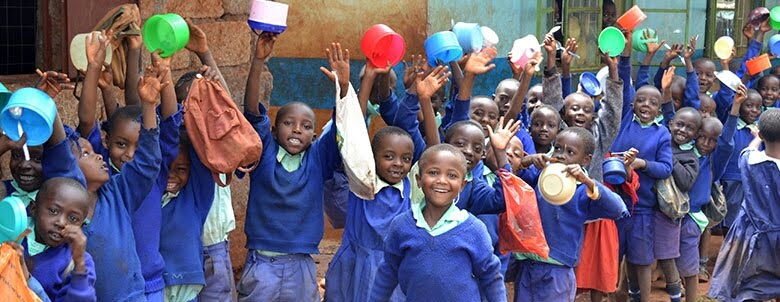
With the free school education in place in kenya, it emerged that a high number of turkana county children did not go to school for lack of food. A group of students from this region resolved to support a food program through a donation page that would offer free essay resources to university students. Touched with this story, we ask for your support to show that poor turkana child that we care for their education and a better future

Excellent Blog! I would like to thank for the efforts you have made in writing this post. I am hoping the same best work from you in the future as well. I wanted to thank you for this websites! Thanks for sharing. Great websites! szexchat
ReplyDelete