Sample Annotated Bibliography
Prompt #2: “In some stories, characters come into conflict with the culture in which they live.”
Working thesis:
Gregor Samsa’s physical transformation into a vermin is a physical manifestation of his already
alienated state and demonstrates how his family viewed him as a thing instead of a son or brother
that they loved.
Kafka, F. (1990). The metamorphosis. New York, NY: Scribner Paperback Fiction.
The Metamorphosis begins when Gregor Samsa wakes up and discovers he has been transformed
into a large insect. The story tells how he and his family deal with his transformation, which a
focus on the dehumanization that Gregor faces in his job and his family role. Gregor attempts to
communicate, but cannot and, isolated and misunderstood, he slowly deteriorates. Kafka uses
Gregor’s transformation into an insect as a metaphor for how modern life squashes our ability to
interrelate with others and create meaning in our lives.
Ryan, S. (2007). Franz Kafka’s Die Verwandlung: Transformation, metaphor, and the perils of
assimilation. Seminar: A Journal of Germanic Studies, 43(1), 1-18.
This source by Simon Ryan explores how Kafka’s Jewishness created anxiety about his body,
particularly since anti-Semitism pervaded his Czech culture. The stereotypes of Jewishness did
not allow Jewish people to easily assimilate into the dominant culture, though many Jews
attempted to do so. Gregor Samsa’s transformation into an insect is a metaphor of the power and
pervasiveness of anti-Semitism and the inability of a Jewish man to fully assimilate. The insectbody symbolizes how Jewish people were viewed and Gregor’s quiet extinction foreshadows the
Holocaust. This source helps to define how body image, coupled with Jewishness, can alienate a
person from the culture around him.
Sokel, W. H. (1983). From Marx to myth: The structure and function of self-alienation in
Kafka’s Metamorphosis. Literary Review, 26(4), 485-496.
Walter Sokel discusses the concept of self-alienation and how Kafka’s story represents it in a
literal way. Using a Marxist analysis, Sokel shows how labor, as it is defined in the story, is
structured within a capitalist system where the worker -- Gregor -- is alienated from the product
of his labor. Therefore, his work has no meaning to him. However, describing this as a “mythical
setting,” Sokel shows how Gregor assumes guilt for his inability to provide labor and, as a result,
dies without ever recovering his humanity. This source will help define why Gregor turned into
an insect and how the economic system alienated him from himself and his family.
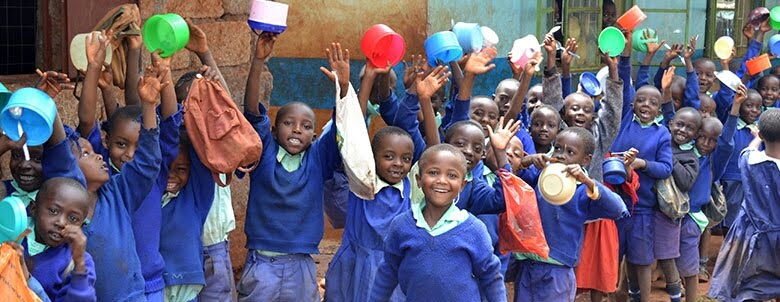
With the free school education in place in kenya, it emerged that a high number of turkana county children did not go to school for lack of food. A group of students from this region resolved to support a food program through a donation page that would offer free essay resources to university students. Touched with this story, we ask for your support to show that poor turkana child that we care for their education and a better future

No comments:
Post a Comment