Effective capacity is the extreme production that can be achieved through provisional measures such as subcontracting and overtime due to problems in machinery or any other issue, while Design capacity is the extreme production that can be achieved under regular conditions. These may include regular staff levels and genuine work schedules. Design capacity is quite different from effective capacity in several factors, which will be discussed below (Menascé & Almeida, 2000).
The productions achieved when using design capacity methods are higher when compared with effective capacity,
reason being that in effective planning the facilities that may be used, may have been designed for an earlier version of the product than what would currently be needed hence making them lower. In design capacity, the outcomes are at their maximum in normal time usually a given time, while effective capacity, the outcomes are at their maximum after other constrains are considered such as overtime (Menascé & Almeida, 2000). In design capacity, the outcomes may be higher when compared with effective capacity, this is because, in effective capacity there may be constrains such as quality problems and delays, which consequently may cause reduction in the outcomes (Menascé & Almeida, 2000).
There are several challenges which may be encountered when using any of these methods as discussed here. In effective capacity, the outcomes may decrease if the process factors are not efficient. For the outcomes to be high in effective capacity, the process factors have to run smoothly. All the personnel working in an effective capacity, have to be well trained and good experience is a must have for it to work effectively (Menascé & Almeida, 2000). In design capacity method, there is likelihood of more competitors as no constrains are met for extra work. The productions in design capacity are done at regular hours hence an organization that uses the effective capacity method poses a large competition since constrains makes the production to continue even during overtime hours (Menascé & Almeida, 2000).
References
Menascé, D., & Almeida, V. (2000). Scaling for e-business. Upper Saddle River, NJ: Prentice Hall PTR.
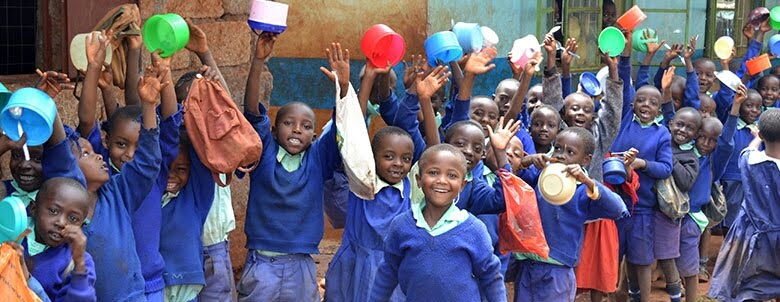
With the free school education in place in kenya, it emerged that a high number of turkana county children did not go to school for lack of food. A group of students from this region resolved to support a food program through a donation page that would offer free essay resources to university students. Touched with this story, we ask for your support to show that poor turkana child that we care for their education and a better future

No comments:
Post a Comment