Introduction
As human beings carry on with their daily activities, they are bound to come across certain experiences that challenge them in one way or the other. These experiences may be stressful, painful, or traumatic depending on the nature of the occurrences. Traumatic experiences comprise of cases that individuals witness or are victims of heinous acts or accidents. Once such events happen to an individual, emotional trauma is evident as they try to come to terms with what happened to them. Some cases of trauma do not necessarily occur to victims but rather to witnesses as well. For instance, in the event of a gross accident, the victims of the accident will carry the memory of that incident for the rest of their lives. The individuals who witnessed such an accident will also have a hard time coping with the events they saw. In this way, these individuals will relive the memory of the ordeal each day of their lives. This will translate to considerable damage to their psychological health and probably cause Post-Traumatic Stress Disorder (PTSD).
The twelve tribes of Hattie is a book with more to offer than the issue of race and the plight of the Blacks in America. The book also deals with other issues, such as family, traditional healing, music, psychosis, trauma, and gender. Nevertheless, trauma is the most important theme in the book. Mathis outlines how trauma has helped shape a generation of Blacks. The book not only brings into focus the plight of the African Americans in Georgia during the early 20th century, but also links the events at the time with the current generation of adults from the community. Although a majority of the adults from the Blacks living today did not live through the Jim Crow laws, the laws and the hostility directed to the Blacks at the time still haunts them. Hattie goes through a series of traumatic events that help shape her view of self and the world. She brings up her children with a firm resolution of preparing them for a world that is unfair and unforgiving, something she learns from her experiences first in Georgia where her father is shot and later in Philadelphia where her mother and two of her children die.
Trauma and Post-Traumatic Stress Disorder
Traumatic events carry with them adverse effects on the victims they affect. In most cases, these events entail life-threatening encounters whereby the victim faces sudden danger that was not expected or anticipated. The victims are therefore unprepared and cannot do anything to remedy the situation or stop the events. As a result, victims of these events suffer psychological damage and have to live with the images of the occurrence from then onwards. Victims of crime such as armed robbery, rape, and survivors of tragedies such as earthquakes have to live the rest of their lives with the burden of trying to forget the ordeals that affected them. Dealing with trauma or PTSD often presents many challenges whereby one may need to seek professional help to help them cope with their situation. Family members and friends are also instrumental in the recovery process because they give support and care during the hard time. The symptoms of traumatic stress are devastating and can disrupt the normal life of any individual (APA). They include nightmares, emotional detachment, insomnia, fear, depression, and irritability. These elements affect the quality of life and become a burden to an individuals life.
Trauma and PTSD is not restricted to individuals who have experienced accidents or acts of violence. It may also result from the household whereby the activities that a family engages in or goes through have a bearing towards the emotional health of the members. Individuals, especially children who grow up in family setting that exhibit violence and mistreatment may develop trauma or PTSD. The events they observe or go through every day in their home or neighborhood affect their emotional and psychological health to a great depth. For instance, children who endure mistreatment around the neighborhood or in their own house will have trouble coping with some situations in the future that involve violence. Research shows that children accumulate the memories of their childhood ordeals and carry with them these memories throughout their live. Therefore, if confronted with similar situations in the future, they may respond radically because of their experiences. Most of their judgment and response to situations will be determined by the experiences they passed through or continue to pass through (Herman, 49). To help understand this better, a look at two novels, Dionne Brand's ‘What We All Long For’ and Ayana Mathis' ‘The Twelve Tribes of Hattie would be instrumental.
What We All Long For is a novel that mainly focuses on the lives of four young individuals living in Canada. An insight into the lives of two characters in the novel, Tuyen and Jackie will help in the discussion concerning trauma and PTSD. Tuyen is an Asian Canadian young artist struggling to make it in life. Her family migrated from Vietnam and settled in Canada where her father, opened up a restaurant business. As the family boarded a ship to sail out of Vietnam, one of the children, Quy was left behind. Despite the family making it safely to Canada, the memory of their loved one remained with them. Tuyens parents never recovered from the loss of their child that fateful day that they left Vietnam. The family migrated from Vietnam in search of a better home where the children would grow up well and be responsible adults. The loss of the child at the harbor presented a challenge to the family because they had to live knowing that one of their own was no longer with them. The parents especially felt mixed feelings of guilt and self-resentment because they felt responsible for the loss of their child. It is the duty of every parent to look after their children to ensure that they have a good life and are safe. In this case, the parents felt that they had failed in their duties because of the lost child. Over the years, they spend many resources as they tried to locate their lost child. This was very frustrating because they had to work extra hard to ensure that they had enough money to sustain the family as well as have allocate resources for their childs search. The parents suffered from stress related illnesses and were often depressed. Reliving the events that happened on the fateful day brought troubled nights to them whereby cases of insomnia were the order of every night. This affected the quality of their life and caused them a great deal of pain. It was not easy for them to live every day knowing that their child was not at home where he should be. They kept wondering where he ended up or if he was still alive. These thoughts were tormenting to them, which led to a stressful and traumatic life (Brand 16).
A healthy relationship existed between the family members before they left Vietnam. This however changed when the family lost the child as they relocated. Because of the guilt felt by the parents, they had to spend time and money looking for their child. This took a toll on the relationship between the family members. The parents were in an unstable state and this affected the children as well. Tuyen had to take initiative of her life to cope with the situation. The trauma on her parents changed her and she began to question everything the parents and family members believed in. she faced issues with her sexuality considering that she became a lesbian. She often opposed the decisions of her parents and changed the way she accepted the things that the parents did. This was a result of her parents condition, which left the family dejected. Her other two siblings had to cope with the situation of their lost family member and the stressful life the parents were living in. It is very common for the stress felt by parents to rub off on children (Mathis, 14).
During the growth and development of a child, the day-to-day aspects of life affect the mind of a child. This meant that the children observed what was going on with their parents and had to adapt to the new environment. Their parents were in a fragile state of mind because of the emotional stress they felt. Their psychological health was affected by the event that led to the loss of their child. This meant that their psychological health suffered as well as they came to terms with the situation. They also felt sorry for their parents as they continued to grow. The trauma in the family contributed to their behavioral change. In order to accept the situation in their family, they had to adjust the way they thought and behaved. Tuyen in particular hardened her thoughts and often rebelled. This was in response to the plummeting emotional state of their family. Children who undergo stress and trauma in their childhood often have to change their thoughts and behavior to cope with stressful situations. The loss of their loved one became a burden in their life and kept replaying in their minds (Brand 45).
In the case of Jackie, her family went through a very tough life that threatened to cripple them. Their family was poor and Jackie witnessed incidents of crime and great suffering as she grew up. The parents were disappointed by the way they lived because they struggled most of their life to make ends meet. Jackie became disconnected with her parents whom she viewed as a disappointment. She therefore had to work extra hard to improve her life and that of her family. It is common for children who grow up in extreme poverty to develop fear and agony in their life. This is in response to the hard time they have had while growing up. In most cases, these children are bothered by the thoughts of their family suffering as they try to make ends meet. The children carry these thoughts with them for the rest of their lives. Most of the children vow to work hard to help elevate their families from poverty and endeavor to live better lives. In some rare cases, the children may come to accept their situations and may not work hard and therefore engage in crime and acts of violence. In the case of Jackie, she vowed to work hard and only dated white men. White men were more financially stable as she had observed while growing up. The thought of being poor crushed her, leading to the conclusion that she would only date a person who could offer a comfortable life to her. This shows that people who undergo traumatic events and situations in life try their best to avoid similar situations in the future. In this case, Jackie did not wish to get married to a poor person. Marrying a poor or financially unstable person would remind her of her stressful upbringing which would in turn lead to emotional breakdown. In order to avoid reliving her past, Jackie had to work extra hard to make her own money. She also took extra care in choosing of friends to avoid people who would either remind her of her harsh upbringing or lead her to her past life. It is due to this reason that people who are mistreated or go through a harsh childhood keep away from events that would be a reminder. This causes them to detach themselves from people or activities that remind them of their traumatic experiences (Adams 390).
More often than not, individuals who have had traumatic experiences tend to be careful not to have a repeat of the event. This means that they become alert and oversensitive to their surrounding and friends. For instance, a person who has been a victim of armed robbery will look over their shoulder to check if anyone intends to harm them. Similarly, children who undergo a harsh upbringing will be careful of the activities they engage in and the people they relate with to avoid a repeat of the traumatic events they went through. These individuals will be easily startled and will run at the first sign of trouble. They will avoid places that remind them of their past and will keep a close circle of friends whom they trust. Living with trauma or PTSD is challenge that changes a persons life. Most of the emotions that the individuals feel will be expressed in their behavior. The symptoms of trauma are normal reactions to the traumatic events in their lives. These symptoms are a part of the healing process that will eventually help the individual come to terms with their experiences. It is vital that the victims of traumatic events innovate ways of coping with the memories of their ordeals (Adams 379). Individuals with trauma-related complications will sometime suffer from mental illness if they do not devise ways of managing their condition. Others commit violent crimes as the symptoms of trauma take a toll on their life. Speaking to professionals will help the individual cope with their disorders and therefore avoid getting into trouble that may land them in jail. They may also avoid getting committed in mental institutions by enlisting the help of their friend s and family who will walk with them in the trying period of traumatic stress.
Trauma is a physical or psychological assault on an individuals physical integrity, sense of self, or safety. This often includes the physical safety of someone significant to the individual. Trauma may be a result of a number of factors including abuse, violence, abandonment, bullying, or war. Often, traumatic stress may persist even after a traumatic incident has passed and may continue to affect an individuals ability to perform and function normally. This is referred to as posttraumatic stress. When the neurophysiologic responses of an individual remain aroused for prolonged time even after the passing of the traumatic incident, the condition is described as Post-Traumatic Stress Disorder (PTSD) (Mathis, 15). PTSD affects many aspects of an individual including self-regulation and encompass a broad range of behavior responses that have far-reaching effect on the individual relationships.
In the novel the twelve tribes of Hattie by Ayana Mathis, Hattie is only 17 when her, her mother and two sisters leave Georgia in search of a better life in the North. Hattie and her family are leaving Georgia because of two reasons, the Jim Crow laws, and the shooting of her father in the smithy by two White men in cold blood. Much of the violence towards the Blacks during the early 20th century was economically motivated and as Hattie recounts, as they are leaving, the two men bring down her fathers name plug and erect their own. The death of her father affects her profoundly because she has the image of her fathers body laying on the ground arched in her memory (Mathis, 7). The influence of bereavement on different individuals vary greatly ranging from indifferent to acute sadness, however, each must develop an understanding of what death means and stretch this understanding to include other concepts, such as mortality, irreversibility, justice, injustice, and permanence.
As Hattie and her family settle in their new home in Philadelphia, she realizes she is pregnant with twins. The father is August who is a country boy and she only likes him. The novel opens with Hattie nursing her two siblings because they are suffering from pneumonia. Much of her past in Georgia are flash backs because of the high level of stress she is undergoing alone in the house. Hattie is an intelligent young woman; however, she marries a young August who is training to become an electrician and promises her heaven but never quit delivering. Hattie is optimistic in many fronts after moving to Philadelphia even after the death of her father. She believes the equality and freedom she enjoys in the north creates the right conditions for her to live the American dream, August promises her that the current rental house they live in is only temporal before he buys a new home. Only a few months later, all her dreams are betrayed and within a short time she is a completely different person with a different outlook at life. She loses her twins to Pneumonia despite her frantic efforts to save them. The tragedy is a result of the harsh north winters and the lack of money to buy medicine (Herman 125).
There are two types of psychological traumas. Acute psychological traumas occur when an individual experiences a single traumatic event, such as the death of the father in Hatties case. Chronic psychological trauma occurs when an individual is exposed to an overwhelming amount of stress, such as the death of the father, mother, and two children in Hatties case. Chronic trauma is more persistent has life changing effect if left unattended. Traumatic stress is transmittable form parent to child through the everyday interactions because such parents have difficulties establishing secure attachments with their children. Parents suffering for PTSD unknowing transmit their feelings of helplessness, rage, and anger to their children (Beck 71). When this happens at a very early age, it colors the childs view of the world and the sense of self. Throughout Hatties story as narrated through her children and grandchild, reveal a woman who is determined to prepare her children for an unfair unforgiving world. This is a classic example of someone suffering for PTSD because she engenders the feeling of victimization as is common with most PTSD patients.
By imposing her view of the world on her children, Hattie transmits her psychological traumas to her children. Her children describe her as tough, hard, and strong. They often refer to her as the general and often feel she is cold and distant. The children lack secure attachment from their caregiver form a very young age. This affects their ability to self regulate and increases their chance of developing post-traumatic stress disorder. As the primary caregiver, Hattie has a critical role to play in the lives of her children, it is her responsibility to modulate soothing and stimulation to ensure a healthy psychological arouse. By teaching her children that the world is a harsh unforgiving place from an age, she promotes chronic hyper-arousal in these children as they try to understand and gain some control over the situation. This limits the childs ability to self regulate, which is more likely to play a critical role in the life of the child later in life. Her sons are struggling with alcoholism and gambling. Her daughters are struggling to keep their families together (Caruth 54).
Hatties children have issues affecting their wellbeing during their adulthood. One of her son become a touring jazz trumpeter, however, he is suffering underneath it all because her is a womanizer, which is a coping mechanism to cover his homosexuality. The primary attachment relationships that a child forms with the primary care giver determine the nature of the internal working model the child form of self. Bad experiences in primary attachment relationships undermine self and worldviews. These children develop limited coping mechanisms that are more likely to be overwhelmed by stress when they are exposed to trauma later in life. An individual with such an upbringing and no treatment has only few coping options at their disposal, he or she can respond either with dissociation or hyper-arousal. The men are more likely to respond with hyper-arousal thus the drinking and gambling problem with Hatties sons as they try to cope with the realities of life. The women are more likely to respond with dissociation thus the recurring family problems in their families (APA).
Individuals define the core concepts of themselves based on their capacity to regulate internal states and by their behavioral responses to external stresses. Traumatized individuals have poorly controlled impulses, which led to a high likelihood of violence against self and others. This also leads to a problem with self-definition. Hatties second son moves to another state and becomes a preacher partly to avoid arrest because he beat another boy. He is easily irritable and engages in a fight because of trivial issues. He looks to religion to help him because he is unable to define himself. Hatties third son goes to fight in Vietnam leaving his pregnant wife behind. One of the most profound effects of early trauma on an individual is the failure to develop a separate sense of self. Stresses overwhelm the limited self-regulation capacity leading top fragmentation of self. This leads the individual to focus only on survival and adapting to the demand of the environment (Caruth, 91). Hattie teaches her children that the world is a harsh place and to survive they must adapt and toughen up. The individual loses himself because of focusing only on coping. These reduce the likelihood of pursuing personal goals and aspirations. The feeling creates a victim state of mind, which increases the likelihood for re-victimization.
Hatties old daughter who is also a mother is sectioned for mental illness and leaves her daughter in the care of Hattie and August. Trauma has a bearing on the development of the brain. Early child experiences shape the development of a childs self-image and neuron cells. When an individual experiences threat, the brain responds in a neurobiological response. These responses are usually immediate and irreversible. As an individual continues to experience different stressor at different times, the responses reactive at lower thresholds every time, which affects all domains of development. The individual may later develop problems, such as substance abuse, aggression, somatization, and mental disorders. Another of Hatties daughter attempts to kill herself after a relationship she was in goes south. In some instances, trauma may produce a state of sensitization that trigger an overreaction to an unrelated event. Reactions to stressful situation are therefore the only way to establish the extent of the traumatization. The body and mind have a limit to the amount of stress they can bear. Over activation of the coping mechanisms and subsequent activations, overwhelm the body and minds ability to cope with stressors. This increases the likelihood of depression, substance abuse, and suicide (Beck, 22).
Trauma affects the normal function of the brain and its development. It leads to negative results in spheres important in adult life and costly emotional problems that are preventable with early detection and treatment. Primarily, the best preventive effort is the provision of a nurturing environment for all individuals in the society, especially the young, by providing safe relationship. Secondary prevention and treatment involves the identification of those affected by traumatic events and the timely intervention to ensure self-regulation and development are optimum. The twelve tribes of Hattie is more than a fictional story, it has a deeper meaning. The title alludes to the bible, which pop popular in the American culture, especially when addressing issues like racism and slavery. The family live in the aftermath of slavery and violence in a world where there are deprived even the very basic (Kleinman, 38). The siblings face similar problems to many Blacks living at the time. Despite the many different chapters each having a different character, Hattie is the link between them. She is responsible for bringing up Philadelphia and jubilee who die at an early age, her nine children, and one grandson.
The parent-child relationship that best describe the relation between Hattie and her children is an ambivalent attachment. Ambivalent attached individuals are suspicious, easily distressed, and aggressive. They have problems establishing and maintaining relationships and often they seem distant and cold. Before trauma and grieve changed Hattie, she had a pair of twins. The relationship she enjoyed with these twins is a secure relationship. The parent is always there when the child needs support. This is the best relationship that a parent can have with his or her child. The parent regulates the emotional status of the child to avoid self-destructive behavior, such as the attempted suicide by one of Hatties daughters (Adams, 365).
Conclusion
Parent-child relationships require love, trust, and mutual respect. This relationship has a huge influence on the nature of the child even during adulthood. In many of the relationships that are not working, it is the fault of the child as it of the parent. To begin a healing process, one of the parties involved must appreciate their role in the issue and attempt to engage the other in a meaningful conversation. Despite the many shortcoming evident in the lives of the characters in the novels, it is clear that the parents do the best they can the only why they know how to ensure their children are safe and have the best future possible.
Works cited
Adams, P.L. Prejudice and Exclusion as Social Traumata. J.D. Noshpitz and R.D. Coddington eds. Stressors and the Adjustment Disorders. New York: John Wiley and Sons, 1990. 362-391.
American Psychiatric Association (APA). Diagnostic and Statistical Manual of Mental Disorders, Fourth Edition, Text Revision. Washington, 2000. (DSM-IV-TR)
Beck, E. T. Therapys Double Dilemma: Anti-Semitism and Misogyny. R. Josefowitz Siegel and E. Cole, eds. Jewish Women in Therapy: Seen But Not Heard. New York: Haworth Press, 1991, 19-30.
Brand, Dionne. What We All Long for: A Novel. Toronto: Vintage Canada, 2005. Internet resource.
Caruth, C. Unclaimed Experience: Trauma, Narrative, and History. Baltimore: Johns Hopkins University Press, 1996.
Herman, J.L. Trauma and Recovery. Basic Books, 1992.
Kleinman, A. Writing at the Margin: Discourse between Anthropology and Medicine. Berkeley: University of California Press, 1995.
Mathis, Ayana. The Twelve Tribes of Hattie. Toronto, Ontario: HarperCollins Canada, 2012. Internet resource.
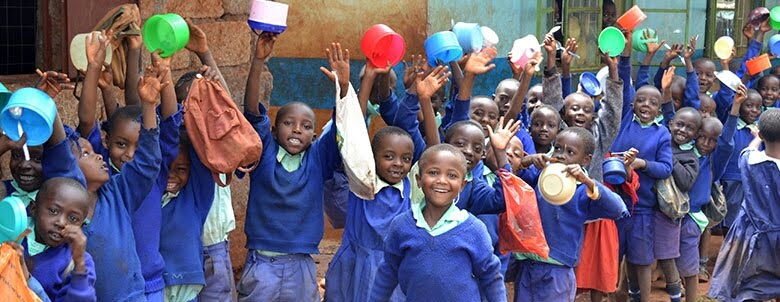
With the free school education in place in kenya, it emerged that a high number of turkana county children did not go to school for lack of food. A group of students from this region resolved to support a food program through a donation page that would offer free essay resources to university students. Touched with this story, we ask for your support to show that poor turkana child that we care for their education and a better future

No comments:
Post a Comment