Poverty is responsible for a decrease in voter turnout. Therefore, what are the main components of poverty contributing to a decrease in voter turnout? The following essay will explore the significant voting factors that play a role in the poverty stricken societies. One indicator commonly used to measure voter turnout is the proportion of individuals who participate in the political system. Defining the underlying effects of decreasing voter turnout rates can be challenging. A low turnout may be due to disappointment or indifference, or even complacent satisfaction with the way the nation is being governed. Contrariwise, a high turnout rate may reflect compulsory voting laws
or pressure. Voter turnout therefore societies do not maintain sufficient indicator of social cohesion. The vast majority of political analysts, however, consider a high voter turnout to be desirable to a low turnout because it indicates that the government is inclined to reflect the benefits of a larger share of the population. Low voter turnout suggests that the democratic system may not be replicating the happiness of all citizens. Voter turnout tends to be decrease among youth, those who are less educated, and those in lower income brackets.
Literature Review
The following article titled “Income Inequality, Redistribution, and Poverty: Contrasting Rational Choice and Behavioral Perspectives” written by Malte Luebker explores the difference in political representation from citizens according to their income. Income plays a large role within political participation in the United States of America. The article is grounded on the “standard axiom of individual utility maximization”. The author effectively offers research suggesting individuals who earn a higher income inequality translates into greater participation in influencing the median voter's participation. While numerous scholarly articles tested this suggestion, the journal continues through offering separated over the applicable degree for redistribution. The article often refers to additional articles that argue similar aspects. However, the current paper argues that the median voter theory suggests that comparative redistribution should rise in line with poverty. The article also provides empirical evidence. An empirical test was presented based on 110 observations from the Luxembourg Income Study ( LIS ). The results test the narrow concept of human motivation that supports rational choice, and highlight the importance of justice orientations that have been stressed in social economics.
The article “What Affects Voter Turnout” by André Blais explores significant information related to the reasons why the United States faces lower voter turnout rates as opposed to other regions. The article mentions an effective question, “Why is turnout higher in some countries and/or in some elections than in others? And Why does it increase or decrease over time?” The article makes references to the political participation within the United States. The journal continues through answering the essential questions at hand. The author utilizes pioneer studies of Powell and Jackman. This journal seeks to address and present possible suggestions about the causes of disparities in voter turnout. The author also includes consistent support through providing empirical evidence. The author also outlines paradoxes and gaps in the field and suggests guidelines for forthcoming research.
In addition, within the journal titled “Residential Concentration, Political Socialization” and Voter Turnout by Wendy K. Tam Cho James G. Gimpel, and Joshua J. Dyck the authors hypothesized neighborhoods from different social classes play a large in voter turnout. Social environment are significant impacts on the decision to vote. The provided data highlights the effective examination of many forms of signifying statistics. The authors mention a unique source of data, registered voter lists, from a rich assortment of sites that allow the scholars to investigate into this social voting involvement. The authors emphasize their dynamic procedure of “multilevel research design”. The article suggests that neighborhood context does have a socializing impact on voters. Interestingly, depending on the social status of the community neighborhoods sometimes influence mobilization while at others times demobilize.
The Associated Press mentions in their article “Census Report Shows Decline in Voting Among Low-Income Groups: Fourth Edition” written by Randolph Schmid point out that the more voters in wealthier groups showed up at the polls in November 1994. Around this the authors of this specific article mention, “When Republicans were swept into power, Voting by low-income Americans was down sharply in the November elections that swept Republicans into control of Congress”. Most importantly, voter turnout consisted of citizens who earned $50,000 or more. Overall turnout was decreased from the prior two off-year elections, notwithstanding the upsurges for higher-income Americans.
To continue within the journal “The Comment & Debate: What's the Matter with Voting Republican if You're Poor?: Low-income Americans Don't Necessarily Vote in Their Own Economic Interests; but It Doesn't Mean They're Patsies” by Gary Younge interesting information is offered about voting trends. The information provided in the article will serve as an effective introduction within the topic of poverty and voter turnout in the United States. The article shares recent United States census data. Ever since President Bush was in office the presumed influence in 2000 poverty has raised by 7%. Additionally, the quantity of individuals lacking adequate healthcare shockingly rose by 9%, and median household income declined by 3%.
The article “The Mobilization of Voters in Congressional Elections” by Gregory A. Caldeiraa, Samuel C. Pattersona and Gregory A. Markkoa investigates why is it that some voters go to the polls on Election Day, and others do not? Researchers of voting turnout have too frequently limited themselves to a comparatively slim variety of independent variables, and have been unsuccessful to contribute significant political effects in studies. In this study, the authors share the development of five substitute representations of electoral turnout, social-psychological attitudes, legal limitations, socioeconomic individualities, economic circumstances, and political mobilization. All models will service effectively when establishing the research paper surrounding poverty and low turnout. The authors particularly underline the mobilization of electorates via campaign spending, partisan competition, and contestation of elections.
Interestingly enough those who are from poverty stricken environments are not given or offered the opportunity to vote. The Las Vegas sun writes in their article, “Shirking a voting law: Requirement to help low-income people register is being neglected”. While visiting offices that offer public assistance individuals from poverty stricken communities, are typically supposed to be asked if they are registered to vote. If the individuals are not registered to vote then they should be offered with available assistance.
This facility is specified in the National Voter Registration Act of 1993. Many citizens are aware of this legislation widely known as the Motor Voter Act. Most individuals only recall it strictly for its responsibility that voter registration services be obtainable at state motor vehicle branches. But this obligation itself would not have attained the law's objective, which was to upsurge the turnout at elections by creating it more suitable for all persons to register to vote. However, several low-income individuals do not own vehicles, the law also stated that public aid workplaces must provide voter registration services.
Though, the article “Shirking a voting law: Requirement to help low-income people register is being neglected” mentions 10 years after the law went into implementation, three public support groups based in Washington D.C. “Project VOTE” and the Association of Community Organizations for Reform Now, which has headquarters all over the globe started to research public aid agencies to see if they were obeying. The authors express through their research they found that countless states were abandoning their responsibility of offering and providing basic services. Due to this issue many poverty stricken individuals are not registered to vote and therefore impact our voter turnout rate. Las Vegas Sun reporter Timothy Pratt states, “About the groups' recently finished report in Friday's paper. The report, which covers 1995 through 2006, faults Nevada for a lackluster effort in recent years. It documents that 13,200 people were registered at state public assistance offices in 1995. That number, however, had fallen to 3,307 by 2006”. The report itself also offered information that outlines that 53 percent of Nevada's low-income citizens 18 years of age and older are not registered to vote. The authors argue that Nevada secretary of state and county administrators must reactivate voter registration platforms at public assistance agencies.
References
Berzofsky, Marcus, Lance Couzens, Erika Harrell, Lynn Langton, and Hope Smiley-McDonald.
"Household Poverty And Nonfatal Violent Victimization, 2008–2012." United States Bureau of Justice Statistics (2014): n. pag. Web. 10 Apr. 2016. <http://www.bjs.gov/index.cfm?ty=pbdetail&iid=5137>.
Blais, André. "WHAT AFFECTS VOTER TURNOUT?" Annual Review of Political Science 9
(n.d.): 111-25. CSUN Library. Annual Reviews Connect with Our Experts, 12 Dec. 2005. Web. 14 Apr. 2016. <http://www.annualreviews.org.libproxy.csun.edu/doi/abs/10.1146/annurev.polisci.9.070204.105121>.
Gregory A. Caldeira, Samuel C. Patterson and Gregory A. Markko (1985). The Mobilization of
Voters in Congressional Elections. The Journal of Politics, 47, pp 490-509. doi:10.2307/2130893.
Luebker, Malte. "Income Inequality, Redistribution, and Poverty: Contrasting Rational Choice
and Behavioral Perspectives." Review of Income and Wealth, 60.1 (2014): 133-154.
Press, RANDOLPH E. SCHMID - The Associated. "CENSUS REPORT SHOWS DECLINE in
VOTING AMONG LOW-INCOME GROUPS: FOURTH Edition." The Oregonian, (1995): .
"Shirking a Voting Law: Requirement to Help Low-income People Register is Being Neglected."
Las Vegas Sun, (2008): .
Younge, Gary. "Comment & Debate: What's the Matter with Voting Republican if You're Poor?:
Low-income Americans Don't Necessarily Vote in Their Own Economic Interests; but It Doesn't Mean They're Patsies." The Guardian (London, England), (2006): 27.
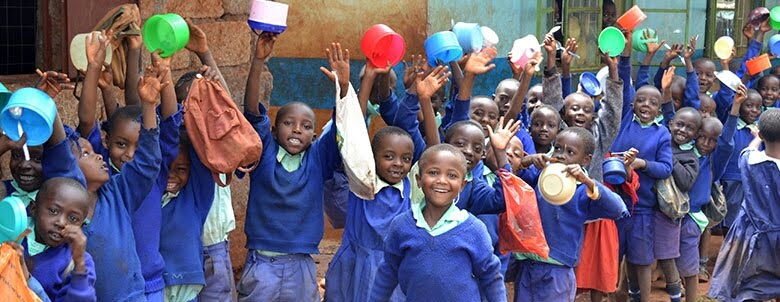
With the free school education in place in kenya, it emerged that a high number of turkana county children did not go to school for lack of food. A group of students from this region resolved to support a food program through a donation page that would offer free essay resources to university students. Touched with this story, we ask for your support to show that poor turkana child that we care for their education and a better future

No comments:
Post a Comment