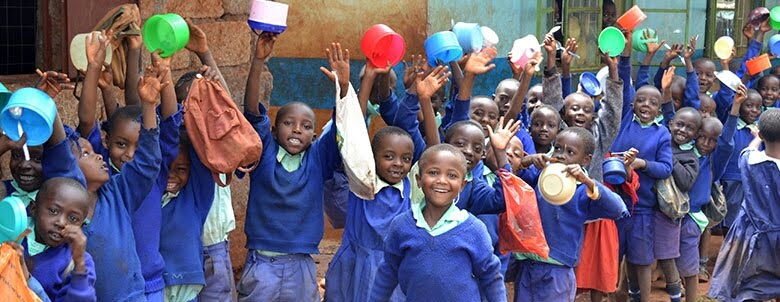
community center proposal
INTRODUCTION
This is a proposal that aims to finance, construct
and equip a community facility for children developmental activities. This
proposal aims to establish activities that cater for physical, societal,
cognitive and psychological development in children between the ages 0-18
years. This facility is expected to cater for all these aspects in
children to
aid in academic and intellectual ability in children while at the same time
improving their socializing skills. The facility will be equipped with
facilities for activities of psychological and intellectual development
inclusively reading, singing, debating and HIV/AIDS classes. Moreover the
facility will incorporate toy sessions, painting, dancing and hockey sessions
for psychosocial and physical development of children. These are crucial
aspects in the growth of children and thus by establishing such a facility the
community will benefit from a noble opportunity sponsored by mock county
council.
Human s are social beings and as they advance in
life they encounter changes in physical, psychological, cognitive and social
changes. With all these changes taking place in humans there comes a reason to
consider how you aim to offer development solutions at the most relevant time
and offer the right solutions. Children are observant during their young age,
they still use this tool as a learning tool, and however they start to embrace
learning through touching as a communication tool. They use social arenas to
develop speech development while at the same time they put that aspect into
real practice (Papalia & Olds, 1978) .
Community centers to foster children developments
have existed for centuries and have all aimed at establishing complete fitness
in humans as social beings. Learning is a process that never takes place in a
single setting but rather an interaction of several aspects that ensure all
aspects of physical and social development are achieved as humans grow.
The various activities
by different age groups to encourage full development activities has been
theorized by psychology scholars for centuries to achieve full development for an all-round person. Games have been endorsed
by most scholars to enhance physical and social development in humans of all
age groups. Hockey games, dancing and painting have been known to enhance
physical action of the body to ensure people develop as physically fit humans,
this has been applied for centuries among people of all caliber. Although vast
gaming exists in the real world I would like to recommend these games since
they are low cost to implement while at the same time they are proven to be fit
among the considered age groups.
The presence of vast development activities in the
real world has led to ,misappropriation of activities to the target population,
while it becomes crucial to cater for age, many games are age targeted and
hence they don’t cut across all age groups. In this proposal I have established
a researched and reasoned activities that will ensure that the community center
will include activities to cater for 0-18yrs age developmental programs. With
these games, cost will be reduced in achieving the required goal while at the
same time addressing a common problem in the real world. Most of the equipment’s
in the market are complex and it takes time and practice to achieve the desired
developmental goals, in this proposal I
have considered the most basic practices to suit the target population.
This project aims at establishing toy sessions and
singing songs for infants. Within the facility, a room for infants will be
specially equipped with a toy store and soft music systems for the infants.
Toys with noise will be bought so that the infants will be able to interact
with them in a friendly manner and hence build their interest in them. Piaget’s
argues that infants conceptualize through touching things and seeing them, when
a child sees an object and later interacts with it, object permanence is established (Imoda, 1998) . By ensuring that
these children interact with toys they will be able to exercise physically
through reaching on objects. The activity of an infant is essential for the
physical wellbeing of the infant as it aids in blood supply to organs and
healthy children avoiding risk of excess fat in body (Zubek &
Solberg, 1958) .
Secondly
singing to the children will be the accompanying activity. This will be
achieved through singing to them, using toy sounds as they interact with toys
and using soft music system from recorded tapes. Since infants learn through
direct experience, their language will develop as they interact with human
speech and sounds, this can be easily achieved through talking to the infants
as you get them to hold the toys. Through personal interaction with caretakers
and their mothers, the infants will establish a social attachment and person
permanence. Through singing to the infants an innate development on speech
recognition and growth in vocal anatomy is established (Ehrenzweig,
1967) .
To achieve this dolls with feeders will be bought.
Vygotsky argues that symbolic play models a child to creating a meaning between
imagined and real play. The child’s imagination develops in a creative way as
he merges the similarity between a toy and real functional objects hence
helping develop sense of emotion and feeling to which a child is attached to (Davis, 2000) .
Link: http://www.mktoys.com/FAIR.htm
At this stage the community center will be equipped
with a painting facility, this will involve a room with a paint store and
sitting chairs for the toddlers. Through painting the toddlers will gain a
chance to physically involve their body organs, express ideas while at the same
time expressing emotions. Toddlers will be given an opportunity to explore colors
and thus create aesthetic pieces of work and thus they will gain academic
knowledge as well as develop an art in this field. Their brain development will
increase curiosity as they discover the mystery behind mixing different colors
to obtain new colors, gain interest in painting and this enables the people
around them to unveil how each child perceives their world (Davis, 2000) . Children will thus
find fun in trying to explore different colors, use of both hands, soothing
experience and take fun in the talent of others. Children will be able to use
this as a communication tool, and develop self-expression and creativity.
The second activity for toddlers will be reading
classes, this will involve the establishment of classes where children will be
taught to pronounce simple words and be able to name most of the things that
exist within their scope of understanding. During these classes story telling
will be incorporated as a major communication tool for enhancing understanding.
By encouraging parents to accompany their children in reading classes, the toddlers
will be able to establish stronger relationships with their parents while at
the same time thy gain academic growth to develop reasoning and social concepts (Imoda, 1998) . Through reading, a
mastery of language will evolve to help them improve their communication
skills, thinking skills and be able to develop concentration and discipline so
that they find it easier to adapt to academic life as they grow. Children will
find joy and relaxation as they encounter new experiences through reading and
mastery of basic concepts. By offering this chance to toddlers they will be
able to develop adaptive behavior to learning environment and reduce anxiety
problems (Zubek & Solberg, 1958) .
This project will involve buying kids painting
supplies to include crayons and water soluble paint that is nonpoisonous.
Goethe’s theory of color and emotion establishes the need to interact with colors
to change and embrace how we experience the world. He finds that colors have a
psychological impact on children’s moods and emotions. Colors act as artistic
experiences that interact to create a world of emotions with vast learning experience
and can enable children develop skills to distinguish different objects (Davis, 2000) .
Link: http://www.amazon.com/gp/yourstore/home/ref=nav_cs_ys/192-6034557-6122044
AGE GROUP 3 –
EARLY CHILDHOOD (3-6 YEARS)
In this stage the facility will establish classes
for modelling through materials like clay, play dough and plasticine, children
will be required to wear aprons so that they will interact freely and be able
to carry modelling with ease. Thiel finds that craft activities like kneading
and modelling to make things look alike is a child’s trigger of creativity and
helps the brain to develop since a child will always challenge himself or
herself to make a better model (Ehrenzweig, 1967) . Children will
always develop a sense of independence when modelling since they take pride in
the final product, any form of reprimanding or correction is not acceptable
when modelling since this is a chance of a child to express their own ideas.
The second activity will involve singing classes.
Since at this stage children have started to develop strong cognition skills,
they will easily embrace putting speech into practice by singing themselves.
Children will be aided by singers on recorded tapes of songs to establish song
mastery and train on simple songs, this will involve church songs, general
songs and patriotic songs. Singing will help create laughter, relaxation and
the development of rhythmic patterns in the speech development areas. Since human
bodies are programmed to conceptualize through listening others sing and
ultimately respond subconsciously in a variety of styles, brain development
takes place whereas the body exercises through increased oxygen intake. Larynx muscle
develop to be able to give multi tunes encouraging pronunciation learning.
Singing will stimulate the thyroid gland also leading to a better balance in
metabolism. Through singing the motor skills develop and a powerful ability to
communicate between the body and the brain develops. Singing can serve as a
perfect stress management tool in early childhood and the entire life of humans
at large (Ehrenzweig, 1967) (Papalia &
Olds, 1978) .
To achieve this modelling clay play dough will be
required to be purchased. This will involve huge clay amounts that can be
accessed from a store where the children will be issued with it as they
participate in modelling. Human psychology behind modelling involve a wide
application of conceptual skills in crafting and thus train their motor skills
and grab a better understanding of the world around them since they appreciate
learning through feeling and touching (Zubek & Solberg, 1958) .
Link: http://www.made-in-china.com/Toys-Catalog/Intellectual-Educational-Toys.html
Age Group 4 – Middle/Late Childhood
At this
stage the community center is to come up with a hall equipped with chairs for
debating. Debating club at this stage will be used as an arena to express
ideas, share ideas and engage children’s brain in constructive activities.
Through debating, the development of speech eloquence and social skills develop
as children realize vast ways of interacting with people of all caliber. Children
will learn of the many changes taking place within their scope of understanding
and be exposed to the outer world, they will have the arena to weigh their reasoning
capabilities. Human’s skills develop through challenges and need to find
solutions, this leads to new ideas and as a process one’s self-esteem and
confidence are raised. Children at this stage will be able to distinguish
between good and bad, learn to obtain information and organize it for useful
purposes. Debates improve critical thinking, personal manifestation, social
interaction capabilities and help in developing leaders. Through debating
children develop citizenship as they keep themselves alert and participative in
current issues and offer solutions in their own way of thinking (Imoda, 1998) .
The second
activity for this stage of children will be establishing a hall for dancing
classes. Children will be given the opportunity to dance within the facility in
order to practice physically and also develop dancing skills as an art. Through
dancing, the children will be able to employ cultural influences on how thing s
are done and develop collective ways in which to showcase their ideas and skills.
Through dancing the motor and cognitive skills get interconnected and the
children involved will be able to do neural mirroring as they practice other people’s
ideas (LeUnes, 2008) . As a result of
practice, procedural knowledge develops through common practices and thus they
get more creative. At this stage children get to understand other people’s
emotions as they dance, they subconsciously understand other peoples moves,
learn to master and memorize complex choreography hence develop a higher level
of motor cognition. Through dancing, bodies exercise physically hence reducing
body fat and reducing related diseases like obesity, enough physical exercise
is vital for respiration, lymphatic fluid flow and mental development (Brewer &
Sciences., 2009) .
To achieve
this a music system will be bought to use for music during dance sessions.
Coleman Griffith an American sport psychologist attributes physical activity such
as dancing as a great muscular relaxer that achieves vision, attention and
mental awareness. He argues that sports psychology is essential in enhancing
personal performance and human growth (Fowler, 1981) .
AGE GROUP 5 – ADOLESCENCE
(13-18
YEARS)
To the adolescents, there will be the establishment
of a hockey field to give them the opportunity to play hockey. Hockey just like
any other outdoor sport is an involving sport where both psychological and
physical involvement is a major consideration. The adolescents will be able to
develop skills in mental preparedness and develop emotionally to be able to
handle different situations. This activity is a good use of spare time ensuring
the adolescents only participate in constructive activities, they will also be
able to eradicate boredom and understand better on team dynamics. At this
stage, adolescents start to realize the need to set goals, look for role models
and find haven for motivation. Through sporting, they are able to associate
with stars, develop role models in sports and other fields, grow physically fit
and realize the need for cooperation in doing work (Brewer &
Sciences., 2009) .
The next activity will be to establish a theater
where HIV/AIDs can be carried. This will involve a giant display for use during
watching of related films and for showing documented studies on the related
studies. Adolescents will be given the opportunity to witness the real field of
HIV/AIDs through interacting with the affected and offering encouragement and
any help as a social activity to the society. They will have camps and visits
to the community and outer community to educate people, offer social help and
create awareness of the disease, they will serve as both students and ambassadors
to the community and the outer world. Adolescents will involve themselves in
active debate and social practices like visiting the affected and thus develop
mental awareness to take charge of their lives and know how to give
psychological help to the affected. By doing so, the community will be
cultivating a good culture to treat others without despise, learn how
leadership entails and make adolescent become good decision makers.
To accomplish this, a hockey field would need to be
built to cater for the hockey sport. Hockey sticks would also need to be bought
to ensure that nobody misses the activities for lack of hockey sticks. For
this, humans need to develop physically and this is a key component to mental
nourishment and is a social activity for providing socializing arena.
Link:http://ccs.infospace.com/ClickHandler.ashx?ld=20150213&app=1&c=compare99&s=compare99&rc=compare99&dc=&euip=154.122.164.21&pvaid=ce6794cab47e458d986c64145ef4c545&dt=Desktop&fct.uid=42799c2942dd4625b3d4454874af4d1f&en=yXcMtrOxNMfV%2bIImplLnI%2ftEC5v8SS28Len64FghkJEXrKjCzEUjK4uzOyOW63SW&du=www.hockeyshot.com
CONCLUSION
Several companies offer solutions for all
development aspects including the physical aspects and the required literature
to enhance development. Psychologist have argued that humans need to develop
psychologically, physically, socially and cognitively.
This
project is a reasoned and researched ideas of my efforts. I have studied,
researched and am confident that its implementation will be of great impact in
children’s, psychological, physical, social and cognitive development. This
proposal will be a great milestone in human development activities. To the mock
city council, it is with great humility that I take this chance to thank you
for your consideration in this project, more so it’s my humble request to
consider my project worthwhile and fund it for the achievement of community
goals.
REFERENCES
Brewer, B. W., & Sciences., I. M.-C. (2009). Sport
psychology. Chichester, West Sussex, UK: Hoboken, NJ : Wiley-Blackwell, .
Davis, S. (2000). Color perception : philosophical,
psychological, artistic, and computational perspectives. New York: Oxford
University Press.
Ehrenzweig, A. (1967). The hidden order of art; a
study in the psychology of artistic imagination. Berkeley: University of
California Press.
Fowler, J. W. (1981). Stages of faith : the
psychology of human development and the quest for meaning. San Francisco:
Harper & Row.
Imoda, F. (1998). Human development : psychology
and mystery. Leuven: Peeters.
LeUnes, A. D. (2008). Sport psychology. New
York : Psychology Press.
Papalia, D. E., & Olds, S. W. (1978). Human
development. New York: McGraw-Hill.
Zubek, J. P., & Solberg, P. A. (1958). Human
development,. New York: McGraw-Hill.

No comments:
Post a Comment